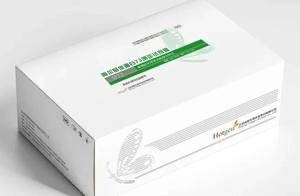
Domestic innovation in in vitro diagnostics has reached another milestone. According to publicly released information, the Guangdong Medical Products Administration recently issued a Medical Device Registration Certificate for a product described as the "Golgi Protein 73 (GP73) Assay Kit (Chemiluminescence Immunoassay)", registered under Class II.
Product Value and Applications
The kit is intended for the quantitative in vitro determination of Golgi protein 73 (GP73) in human serum or plasma and is mainly used clinically to aid in the diagnosis of liver fibrosis and cirrhosis. The work is the result of a decade-long effort by a team from the School of Basic Medical Sciences of Peking University and carries fully independent intellectual property rights.
Serum GP73 levels are a potential biomarker of the degree of liver fibrosis and cirrhosis in patients with chronic liver disease. Combined with routine indicators, the marker improves the identification of moderate-to-severe liver injury and can help reduce the need for liver biopsy. It has been listed as a recommended test in several domestic clinical guidelines, and its wider clinical adoption is expected to provide China's large population of chronic liver disease patients with a more convenient and non-invasive diagnostic option.
Industry Significance
This approval confirms once again that chemiluminescence immunoassay (CLIA) remains one of the most hotly contested technology tracks in China's in vitro diagnostics field and one where domestic substitution is advancing fastest. As core raw materials and testing platforms accelerate toward self-reliance, domestic reagent companies with original biomarkers and stable mass-production capabilities will continue to benefit from the twin drivers of technology iteration and wider clinical adoption.